Your cart
There are no more items in your cart
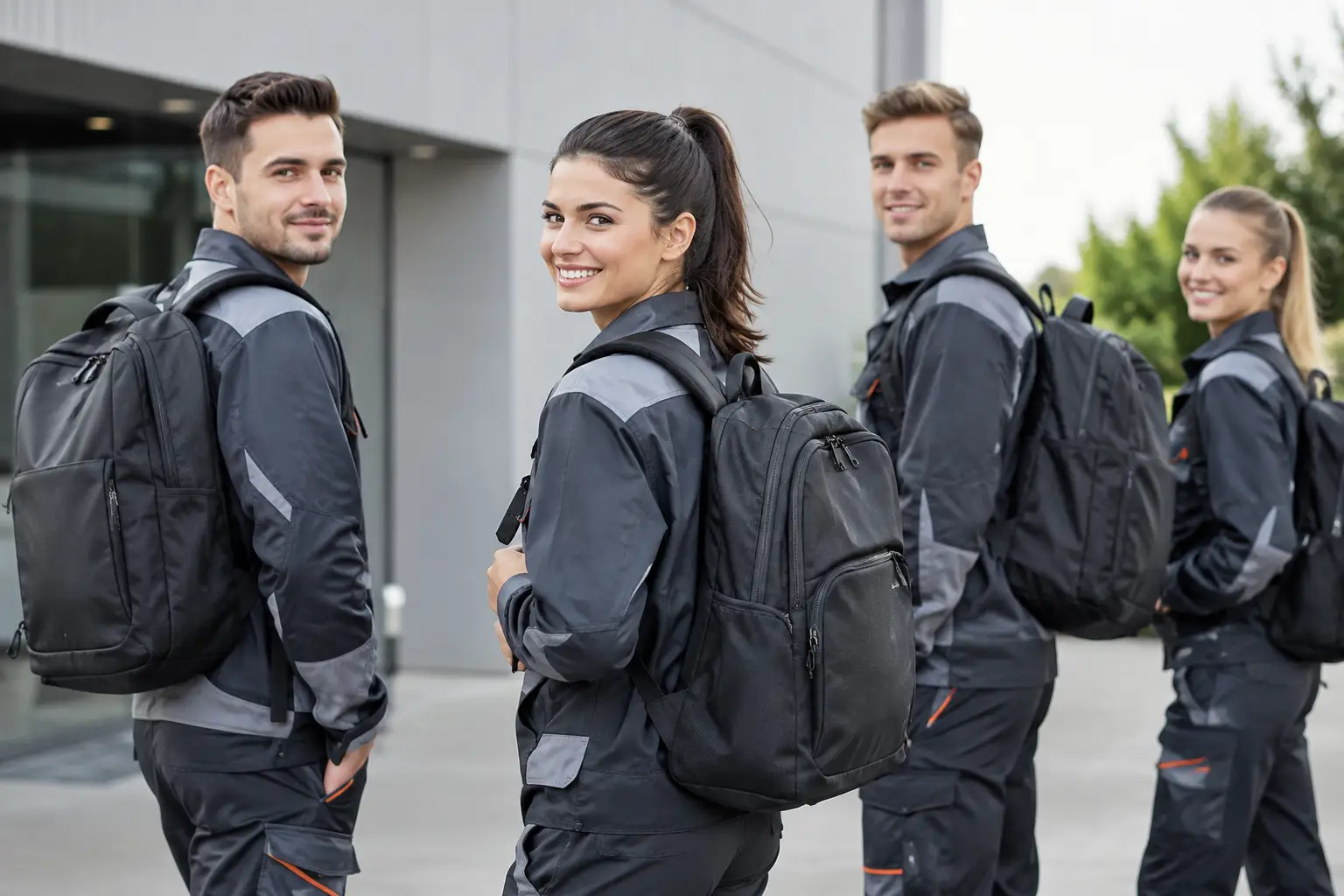
A backpack carried daily by a technician, courier, sales representative or event team is more than just a promotional item. It is part of their work equipment, used to carry tools, documents and other essentials. It is visible to customers and must withstand repeated use. That is why choosing custom branded backpacks for companies should be based on functionality, durability and brand visibility, rather than unit price alone.
For a company equipping at least 10 people, the right backpack can help organise daily tasks and create a consistent public image. Employees need a comfortable backpack that allows them to find what they need quickly. Businesses need a product that retains its appearance, keeps the logo legible and withstands regular use without wearing out after just a few months.
Backpacks are a practical choice when employees travel, work away from the office or need to carry personal belongings and lightweight equipment in an organised way. In logistics and distribution, they can support the daily work of team leaders, sales representatives and mobile staff. In construction and maintenance, they are useful for carrying documentation, measuring devices, lightweight materials and personal items. In IT, consulting and sales, a backpack with a dedicated laptop compartment provides a convenient solution for travelling to client meetings.
Backpacks can also serve a branding purpose. Given to event participants, new employees or sports teams, they keep your brand visible long after a campaign has ended. However, choosing a backpack based solely on its visual appeal can quickly turn into a wasted investment if the product is uncomfortable, too small or poorly made. A backpack that nobody uses does not deliver meaningful brand exposure.
The right choice depends on how the backpack will be used. For teams that travel by public transport or walk between locations, comfort and compartment layout are priorities. For employees working in environments exposed to dust, rain or heavy wear, the material, zips and stitching require closer attention. For a one-off event, a simpler model may be sufficient, provided the customisation is professionally executed.
The first question should not be "Which colour should we choose?" but "What does our team need to carry?" Backpack capacity should match the actual requirements of the job. A compact model may be suitable for promotional materials, diaries and personal belongings. Carrying a laptop, charger, folders and work accessories requires a dedicated compartment and a construction designed to distribute weight properly.
The material directly affects the backpack's service life. Polyester is widely used because of its good abrasion resistance and ease of maintenance. For intensive use, consider fabric density, reinforced panels at the base and handle attachment points, and overall stitching quality. A reinforced base is particularly useful when the backpack is frequently placed on floors, inside vehicles or in work areas.
Zips deserve special attention. They are among the components most likely to fail in a product used every day. A backpack with reliable zips, smooth opening mechanisms and well-positioned compartments helps reduce wasted time and everyday frustration. Adjustable, padded shoulder straps and a comfortable back panel are especially important for teams carrying their backpacks for extended periods.
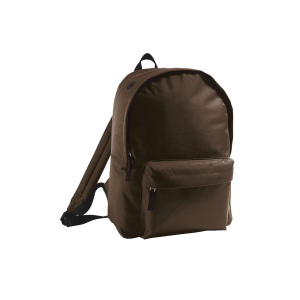
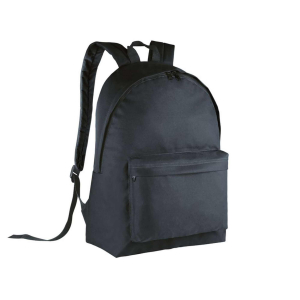
Colour should also be selected with maintenance in mind. Black, navy and grey tend to conceal everyday marks better, while brand colours can be incorporated through contrasting panels, logos or accessories. A large area of light-coloured fabric may look impressive on delivery but can require replacement sooner in industrial, logistics or outdoor working environments.
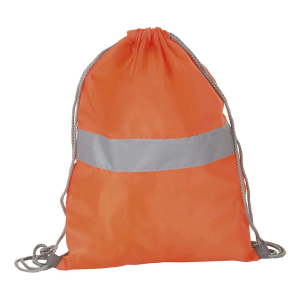
In some working environments, visibility matters more than a discreet appearance. Reflective elements can be useful for staff working near traffic, in warehouses or outdoors in low-light conditions. They do not replace certified protective clothing where it is required, but they can complement work equipment and help improve the wearer's visibility.
A backpack designed for professional use should provide quick access to frequently used items without turning the interior into one overcrowded compartment. Accessory pockets, a bottle holder, a separate laptop compartment and a front pocket for documents may seem like minor details, but they become important after hundreds of uses.
Not every team needs the same features. A model with multiple compartments may be beneficial for technical or sales staff but unnecessary for a recruitment campaign or sporting event. The right choice starts with the intended use, followed by budget and branding requirements. Choosing in the opposite order can mean paying for features that will never be used.
The logo should be positioned where it remains clearly visible without being disrupted by folds, shoulder straps or pocket openings. The front panel is generally a suitable location, but the logo size must be adapted to the available space and the graphic details of the design. A logo that is too small loses its impact at a distance, while an oversized design can make the backpack look visually cluttered.
Computerised embroidery is a reliable choice for simple logos, text and emblems that need to withstand repeated use. It creates a professional appearance and offers excellent durability, particularly on fabrics with sufficient density. However, it is not the best option for designs with complex gradients or extremely fine details. On thin materials, embroidery can also affect the appearance of the customised area.
Heat transfer allows precise application of logos in clear, well-defined colours and works well with graphics featuring distinct shapes. DTF printing can reproduce fine details and multiple colours, making it suitable for more complex brand identities. The right method depends on the backpack material, logo size, number of colours and expected frequency of use. There is no universally superior method, only the right solution for each product.
Before production, the logo artwork should be checked for clarity, colour accuracy and legibility. A low-quality logo file can compromise the final result, even when the backpack and customisation method are suitable. For B2B orders, technical guidance before production helps prevent discrepancies between expectations and the finished product.
The purchase price is only part of the overall cost. An inexpensive backpack that needs replacing after a short period can cost more than a well-made model that remains functional for several seasons. Consider its expected service life, how well it retains its appearance, the cost of customisation and the time required to manage replacements.
Bulk orders help businesses plan their team equipment consistently and may offer more favourable commercial terms. It is also worth considering future requirements, including new employees, seasonal teams, events and business expansion. Planning the order correctly reduces the risk of a model becoming unavailable or having to be replaced with a visibly different alternative.
At Zivara, we consider backpacks part of a wider workwear and corporate clothing solution, alongside uniforms, jackets, vests and other customised textile products. This approach helps businesses maintain consistent colours, logo placement and quality standards across all touchpoints with employees and customers.
To prepare a useful quotation, your supplier needs to know the required quantity, industry, intended use, preferred delivery date and available logo artwork. Mention whether the backpacks need to accommodate laptops, whether the team regularly works outdoors or whether the product will be included in a welcome kit. These details influence the recommendation far more than a simple colour preference.
Do not choose a backpack that looks good only in photographs. Choose a model your employees will take with them every morning, use regularly without having to handle it with excessive care, and carry confidently when meeting customers. That is where genuine brand visibility begins.