Your cart
There are no more items in your cart

A visible stain, a loose button or a work top worn over street clothes can quickly turn an apparently minor issue into an operational risk. In food production, processing, packaging and distribution, food industry uniforms are more than just workwear. They support hygiene practices, help distinguish work areas, improve employee comfort and reinforce the image of a company that maintains control over its production environment.
For an operations or procurement manager, choosing the right uniforms starts with a practical question: what does the uniform need to do every day? Should it help reduce contamination risks, withstand frequent washing, make departments easy to identify or provide comfort in cold, hot or humid environments? In most cases, the answer is all of the above, but the priorities vary depending on the job.
In the food industry, workwear should be treated as part of the hygiene management process, not simply as an administrative item issued when someone joins the company. A dedicated uniform helps separate personal clothing from work areas and gives employees a clear indication that they are entering a controlled working environment.
However, not every white T-shirt is suitable for professional food production. Workwear intended for daily industrial use must withstand repeated shifts, continuous movement, frequent washing and internal hygiene requirements. If a fabric becomes thin after a few wash cycles, loses its shape or retains stains, a low purchase price can quickly lead to higher replacement costs.
Uniforms also support visual identification. Colour coding can distinguish production employees from staff working in packaging, maintenance, cleaning, logistics or visitor management. This straightforward approach helps reduce confusion, simplifies internal checks and supports compliance with the procedures established for each area.
There is no single uniform suitable for every food-related operation. A bakery, meat processing facility, dairy factory and commercial food preparation kitchen all have different working conditions, temperatures and exposure risks. Uniform selection should be based on the actual tasks performed, rather than on a product photograph alone.
Cotton offers comfort and breathability, making it a useful option for physically demanding roles or warmer environments. Cotton-polyester blends, on the other hand, often provide better dimensional stability, dry faster and can perform well under frequent or industrial laundering conditions. The right fabric composition depends on how the garment will be worn and the washing procedures available within the organisation.
For low-temperature environments, workwear may include long-sleeved tops, padded gilets, jackets or insulating mid-layers. In warmer areas, garment construction and moisture management become more important. Providing every employee with the same garment simply to simplify procurement is not always practical when some team members work in cold rooms while others operate near heat sources.
A uniform that is too tight can restrict movement and wear out more quickly at stress points. A garment that is too loose may be uncomfortable or unsuitable around machinery, conveyor belts and work surfaces. Accurate sizing, a functional cut and appropriate sleeve length matter more than they might seem when placing the first order.
Pockets are another feature that should be assessed according to the role. They may be useful for certain administrative or logistics positions. In direct food production areas, however, a company may prefer garments with fewer external features to reduce the risk of forgotten objects, dirt accumulation or snagging. The final choice should be aligned with the company's risk assessment and operating procedures.
White is traditionally associated with cleanliness and makes visible dirt easier to identify. It is suitable for many production environments, but it requires a well-organised laundering process and sufficient garment stock for every shift. Light colours can offer similar advantages while being more practical for certain tasks.
Darker colours may be more suitable for maintenance, warehousing, delivery or material handling. An effective approach is to establish a controlled colour palette: white for production, a distinct colour for cleaning, another for technical teams and a clearly identifiable option for temporary staff. This is not simply an aesthetic decision. It is a practical identification system for the workplace.
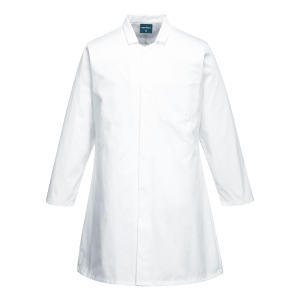
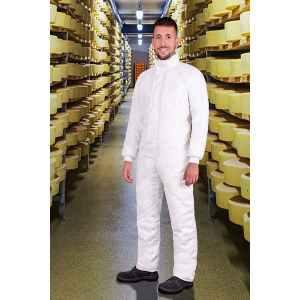
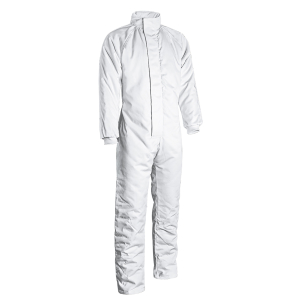
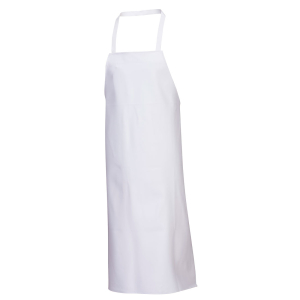
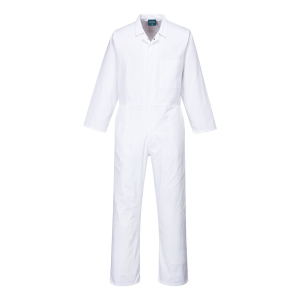
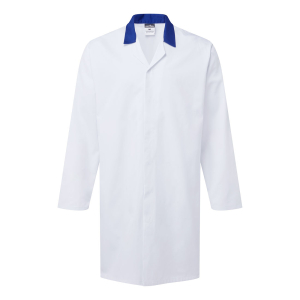
A workwear programme is most effective when each employee receives the garments required for their responsibilities. For production staff, a uniform set may include T-shirts or work tops, work trousers and coats or tunics, depending on internal procedures. Commercial kitchens and food preparation teams may also require aprons, chef hats and other items specified by the facility's hygiene rules.
Employees working in cold rooms need appropriately rated thermal protection, while loading and distribution teams may require high-visibility workwear for yards, loading bays and areas with vehicle traffic. Where specific occupational hazards exist, uniforms must be complemented by suitable personal protective equipment (PPE). Workwear and PPE serve different purposes, even when they are worn together.
It is advisable to determine the number of uniform sets required per employee from the outset. Providing two or three sets may increase the initial investment, but it allows garments to be changed and laundered according to schedule without last-minute workarounds. When clean uniforms are unavailable, employees may resort to temporary solutions that do not always meet internal standards.
Adding a company logo to workwear increases brand visibility and creates a consistent appearance for employees, auditors, customers and visitors. In the food industry, however, both logo placement and application method should be selected carefully. An oversized logo positioned in an area exposed to constant friction or repeated washing may affect the garment's appearance before the end of its expected service life.
Computerised embroidery is a durable option for simple logos, names and identification details on polo shirts, gilets, jackets and corporate workwear. It provides a professional finish and can offer good durability, although it is not suitable for every lightweight fabric or for graphics containing many small details.
DTF printing and heat transfer are useful options for colourful, detailed logos and clear garment markings on compatible textiles. The result depends on the fabric, the size and placement of the design, and the garment's laundering conditions. DTG printing is particularly suitable for complex designs on textiles with a high cotton content, but its suitability should also be assessed against the frequency of professional washing. No single customisation method is best for every application. The right choice depends on the garment, the artwork and the intended working conditions.
In areas with strict hygiene controls, employee identification should remain discreet and easy to maintain. A small logo on the chest or sleeve may be more practical than extensive branding. Before proceeding with a full production run, it is worth checking a sample to assess its appearance, comfort and resistance to washing.
A well-planned B2B order should begin with operational requirements rather than colour selection. Identify the job roles, size ranges, temperature conditions, washing frequency and number of uniform sets required per employee. Then confirm delivery lead times, the availability of repeat orders and product consistency for future purchases.
Avoid comparing suppliers solely on price per garment. Assess the total cost of use instead: how long the fabric lasts, whether the garment retains its shape, whether the logo remains legible and how frequently the uniform needs replacing. In professional workwear procurement, durable garments can reduce disruption, internal complaints and urgent replacement orders.
Zivara can help businesses build workwear packages for orders of at least 10 items, with a selection of professional textiles and recommendations for suitable customisation methods. For organisations equipping several departments, consulting a workwear supplier before production can help prevent inconsistent garment choices, colour combinations and branding methods that make future stock management more complicated.
The right food industry uniform does not need exaggerated promises to prove its value. It performs reliably throughout every shift: it remains comfortable, can be maintained correctly, helps distinguish teams and supports the procedures the company expects employees to follow. That is the foundation of a workwear programme designed for long-term performance, not just for the first day of use.