Your cart
There are no more items in your cart

Choosing custom polo shirts for your business starts with your working environment, not the colour or the lowest price per item. A polo shirt worn for a one-day event has different requirements from one worn three times a week and washed regularly, either at home or in an industrial laundry. Before placing an order, consider how often the shirts will be worn, the level of physical activity involved and the care instructions required.
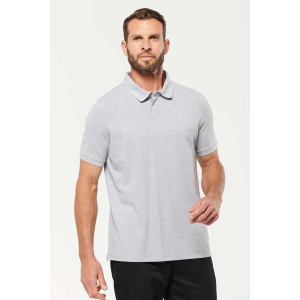
Piqué fabric is widely used for polo shirts because its textured construction allows airflow and helps maintain a smart appearance. Cotton offers a comfortable feel against the skin and is suitable for many everyday working environments. Cotton-polyester blends can be a practical choice for teams that wash their uniforms frequently, as they generally dry faster and can retain their shape well.
There is no single fabric that suits every business. In hospitality and restaurants, comfort and a consistently professional appearance may be the main priorities. In logistics, distribution and other physically demanding environments, durability, colour retention and easy maintenance may matter more. Breathability becomes particularly important in warm working conditions, while darker or heathered colours can help conceal everyday marks between washes.
Pay attention to construction details that influence the lifespan of custom workwear polo shirts, including reinforced seams, a collar that retains its shape, neck tape and good-quality buttons. These are not merely decorative features. They affect how the garment looks and performs after repeated wear and washing.
A polo shirt that is too tight can restrict movement, while an excessively loose fit may look untidy or interfere with certain tasks. For B2B orders, consider the available size range, the proportions of men's and women's styles, and the need to keep spare garments for new employees.
A comprehensive size range helps reduce exchanges and delivery delays. If employees work in different environments or temperatures, you can maintain a consistent brand identity while selecting suitable options: short-sleeved polo shirts for indoor work, long-sleeved garments and winter clothing for colder conditions, or polo shirts worn as a base layer under a jacket.
Corporate uniforms should support employees in their daily tasks, not force them to compromise on comfort or mobility.
Logo customisation should be considered alongside garment selection, rather than added as an afterthought. Fabric composition, artwork size and decoration technique must work together. A complex logo produced using an unsuitable method may lose fine details or fail to withstand repeated washing.
Computerised embroidery is a popular choice for small and medium-sized logos, particularly on the left chest, sleeve or collar. It adds texture, creates a premium appearance and offers excellent durability in regular use. However, it may not be suitable for extremely fine artwork, gradients or very large designs, as dense stitching can make the garment heavier and less flexible.
DTF printing (Direct-to-Film) is suitable for multicolour logos, fine details and graphics that need to be reproduced clearly. The design is transferred to the garment using heat and pressure, making the technique suitable for a range of textile compositions. Long-lasting results depend on film and ink quality, correct application settings and following the garment's care instructions.
DTG printing (Direct-to-Garment) is particularly suitable for detailed designs on garments with a high cotton content. It can reproduce images and colour transitions with a natural printed appearance. The most appropriate choice depends on the fabric, artwork and order quantity.
Heat transfer printing can be useful for simple designs, names, numbers and functional markings when the garment and application method are compatible. Each technique has different strengths, so the best option should be selected according to the intended use rather than appearance alone.
Logo placement is just as important as the customisation method. A discreet logo on the left chest is a versatile choice for many industries. A back print can improve team visibility in the field, while sleeve branding can reinforce corporate identity without making the garment look overcrowded.
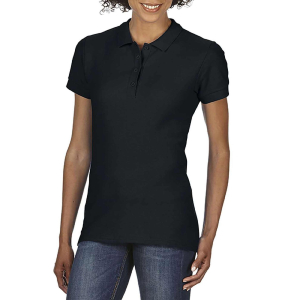
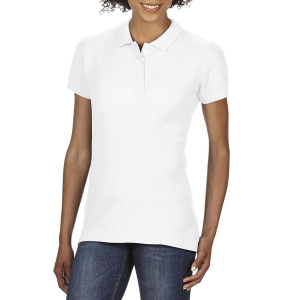
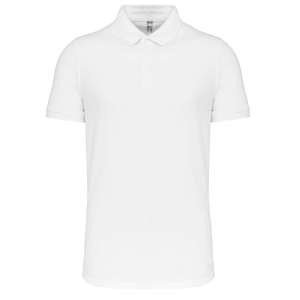
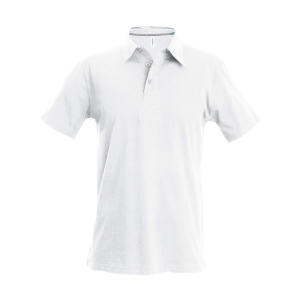
The colour of your custom polo shirts can reinforce brand recognition, but it should not be selected solely according to your visual identity guidelines. White creates a clean, professional appearance and can work well in controlled environments, although it requires careful maintenance. Navy, black, charcoal grey and heathered shades are often more practical in workplaces exposed to dust and everyday dirt.
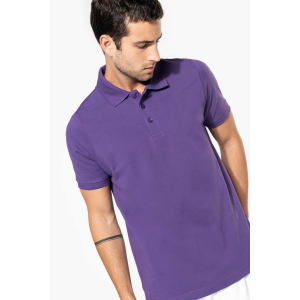
Brighter colours can help teams stand out in retail, events, delivery services and outdoor activities. The final choice should balance brand consistency, practicality and the conditions in which employees work.
If employees work near traffic, machinery or other hazards, a branded polo shirt does not replace certified high-visibility workwear. A yellow or orange garment does not automatically qualify as personal protective equipment (PPE). Where visibility protection is required, garments must be selected according to the relevant risk assessment, applicable standards and workplace requirements.
A low-cost polo shirt may look attractive in an initial quotation, but it can become more expensive if it needs to be replaced quickly. When comparing custom polo shirts for companies, consider the total cost of use: how well the garment withstands repeated wear, how it looks after washing, how securely the logo remains attached and how much time the team loses when replacements are needed unexpectedly.
Orders of at least 10 items can help businesses achieve a consistent team appearance, with pricing based on order volume, colour choices and customisation requirements. For organisations operating across multiple locations, it is useful to establish a clear uniform standard: the same garment model, consistent colours, identical logo placement and an accurate record of employee sizes.
This approach helps maintain consistency across locations and makes repeat orders easier to manage.
At Zivara, garment selection and customisation recommendations start with the actual conditions in which the products will be used. We do not compete solely on the lowest price when it comes at the expense of durability. Businesses need workwear that performs well beyond the day of delivery and maintains a professional appearance throughout regular use.
Before requesting a quotation, prepare your logo in the highest available quality, the required quantity, the size breakdown, your preferred colours and information about your team's working environment. These details help us recommend a suitable garment and decoration method while reducing the risk of choosing a product based on appearance alone.
For companies looking to equip their teams consistently, the right solution combines suitable garments, durable customisation and a practical approach to everyday use. The result is a team that looks professional, moves comfortably and represents the business throughout every working shift.