Your cart
There are no more items in your cart
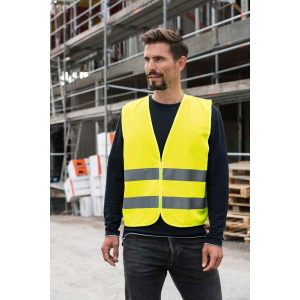
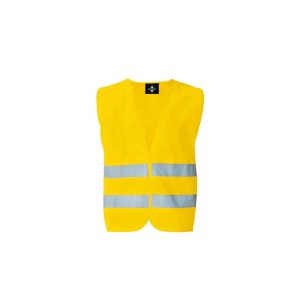
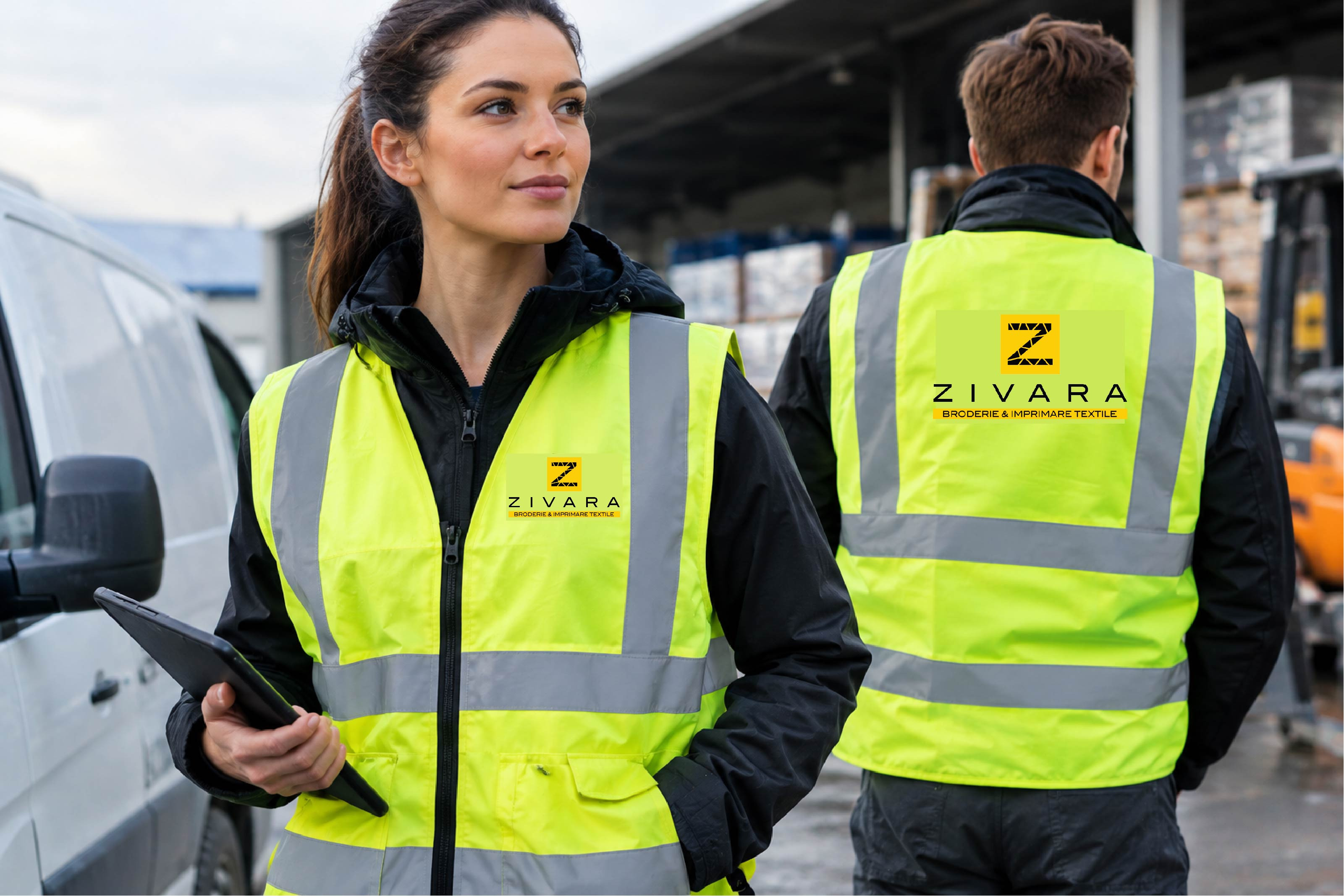
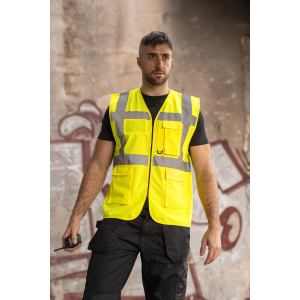
A high-visibility vest is useful wherever employees need to be noticed quickly, rather than relying solely on a standard work uniform for identification. In logistics and distribution, high-visibility workwear helps distinguish employees in areas with forklift and vehicle traffic. In construction, road maintenance and technical services, visibility can be a direct safety consideration. In retail, event management, technical services or security, a customised vest can immediately show who is part of the team.
Customisation also has a practical role. A company logo, employee name, department or job title can help customers, drivers, visitors and colleagues identify the right person without unnecessary questions. For teams working on-site or across multiple locations, this clarity supports both operational organisation and a consistent professional image.
However, not every fluorescent vest with reflective stripes is automatically suitable as protective equipment for every working environment. If the job requires high-visibility workwear, the garment should be selected according to the specific risk assessment and applicable requirements, including EN ISO 20471 where relevant. The level of risk, vehicle speed, ambient light and duration of exposure all influence the appropriate choice. Where a garment is PPE, its conformity and CE marking should also be verified.
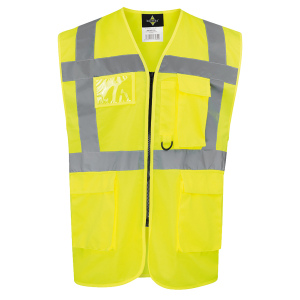
Fluorescent material improves conspicuity during daylight and in poor ambient light, while retroreflective material becomes particularly important when illuminated by headlights or other artificial light sources. These two elements work together. A yellow or orange vest without retroreflective material does not provide the same level of visibility in areas with night-time vehicle traffic, while reflective strips alone cannot replace the fluorescent background required for many high-visibility applications.
For indoor warehouse work, a lightweight vest with good visibility and a comfortable fit that does not restrict movement may be sufficient. For teams working outdoors, near roads or around heavy machinery, the amount of fluorescent material, the placement of reflective bands and the required visibility class should be carefully considered. During colder months, the vest should also be large enough to wear over a work jacket without excessive tension, twisting or covering the reflective elements.
This is where the difference between a promotional garment and professional workwear becomes important. A promotional vest may meet a temporary identification need. A professional high-visibility vest needs to withstand frequent wear, repeated washing and the actual conditions of the working environment. Purchase price matters, but the real cost of a vest that fades, tears or loses its reflective performance after only a few washing cycles can be considerably higher than it initially appears.
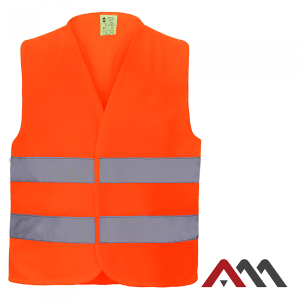
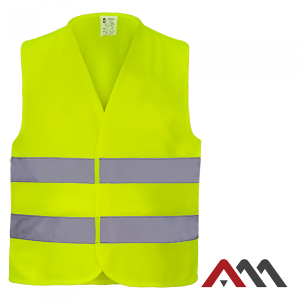
A simple pull-on vest is quick to put on over existing clothing and can work well for visitors, couriers or mobile teams. Models with zips, pockets and a more substantial fabric are often better suited to situations where the vest forms part of the employee's daily workwear. For physically demanding activities, breathability and freedom of movement are important. In cold or wet conditions, the vest should be considered as part of the complete workwear system and fit comfortably over the outer layer being worn underneath.
There is no single high-visibility vest that is ideal for every department. An inventory team has different requirements from a technical emergency-response team. An efficient B2B order should therefore be based on job roles, size ranges, season and frequency of use, rather than simply on a product photograph.
Customisation of a high-visibility vest should be planned before production. The safest area for a company logo is generally an unobstructed section of the chest or back, positioned so that it does not cover reflective bands or unnecessarily reduce the fluorescent surface. An oversized logo may look impressive in a product presentation, but it can become visually dominant, harder to read at a distance or unsuitable for a certified high-visibility garment.
The size, colours and placement of the artwork should be adapted to the specific vest. A design containing very fine details will not perform identically on every fabric, while insufficient contrast can make a logo difficult to see precisely when the vest is being used in challenging conditions. In many cases, a simplified version of the company logo applied cleanly produces a more professional result than an overly complex graphic.
Heat transfer is a common option for clear logos, text, numbers and graphic elements applied to technical fabrics. It can be suitable when the correct transfer material is selected and the application process is controlled according to the vest manufacturer's specifications. For teams with multi-colour corporate identities, DTF can reproduce detailed graphics effectively, but its suitability should be assessed according to the flexibility of the material, the application area and the garment's care requirements.
Computerised embroidery provides a durable and professional appearance on many types of workwear, but it is not automatically the best choice for every high-visibility vest. Embroidery adds weight, involves needle perforations and may be unsuitable for certain areas or lightweight technical fabrics. DTG is mainly designed for textiles with a high cotton content and is generally not the first choice for technical polyester high-visibility vests.
For vests used as PPE, the personalisation method should be assessed against the manufacturer's specifications and the organisation's applicable conformity requirements. Applying a logo should not be treated as purely cosmetic. If the decoration reduces required visible areas or covers retroreflective bands, the garment may no longer be suitable for its intended application.
A well-prepared B2B order helps reduce delays, sizing issues and costly rework. Before requesting a quotation, it is useful to establish four key points: the working environment, the type of vest required, the quantity by size and the artwork to be applied. If different teams work in different conditions, several vest configurations may be more appropriate than using one model throughout the organisation.
The company logo should ideally be supplied in a high-quality format, preferably as a vector file when available. This makes it easier to assess minimum detail size, colours and the most suitable application method. Approving a visual proof before production is also recommended, particularly for larger orders or for workwear that needs to comply with strict internal requirements.
Washing is another purchasing criterion that is often overlooked. Employees should receive clear instructions regarding washing temperature, drying and the use of treatments that could damage reflective materials or the personalisation. A high-quality vest still requires proper care. Companies should also have a replacement plan for garments that become permanently soiled, damaged or no longer meet the required visibility performance.
A well-chosen high-visibility vest does more than create a uniform appearance across a team. It can reduce confusion in busy areas, support workplace safety procedures and put the company's identity in front of the people who interact with its employees. For companies equipping teams of 10 or more employees, product selection and customisation should be treated as an operational decision rather than a last-minute purchase.
Zivara recommends the appropriate product and personalisation method according to the working environment, fabric, quantity and intended use, so that the branding remains professional throughout real-world use. A good high-visibility vest should not simply carry the company's identity. It should remain visible, functional and presentable throughout every working shift.