Your cart
There are no more items in your cart


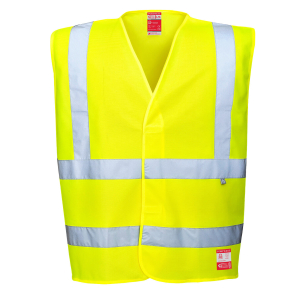
A high-visibility vest that loses its visibility after a few washes or a safety boot that fails to provide the required puncture resistance is not a cost-saving purchase for a public organisation. It means replacing equipment sooner than expected, exposing workers to unnecessary risks and creating difficulties during delivery inspection. PPE procurement through public procurement procedures should start with the actual risks associated with each job role, rather than relying solely on a generic product name or the lowest advertised price.
For contracting authorities, educational institutions, public services, state-owned companies and other organisations purchasing workwear and personal protective equipment (PPE), effective procurement comes down to three essential factors: verifiable protection, products that withstand real working conditions, and clear documentation at every stage of the purchasing process. Where corporate or institutional branding is required, customisation must be assessed as carefully as the material, sizing and protective performance.
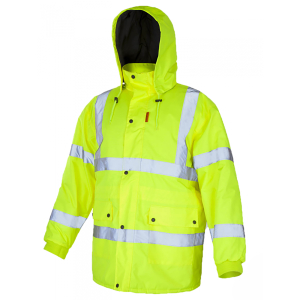
The term “protective equipment” covers a wide range of products. Gloves designed for light handling are not necessarily suitable for a workshop where workers face sharp edges. An ordinary waterproof jacket is not a substitute for high-visibility clothing intended for work near moving traffic. For this reason, the first useful document is not a product list, but an assessment of the activities and workplace hazards the equipment must address.
Identify who will use the products, in what environment and how frequently. Outdoor work in rainy conditions, night-time operations, industrial maintenance, work in refrigerated storage facilities and cleaning services all involve different requirements. For each category, define the hazard that needs to be controlled, such as reduced visibility, moisture, cold, slipping, impact, cuts, heat, splashes or intensive wear.
Next, distinguish ordinary workwear from personal protective equipment. A polo shirt, a standard shirt or a softshell vest may improve comfort and present a consistent team image without automatically qualifying as PPE. Certified high-visibility clothing, safety footwear and protective gloves must meet the applicable technical requirements. Combining these categories in a single description without clear specifications can create confusion during both tender evaluation and delivery inspection.
Technical specifications must be precise enough to protect the end user while remaining sufficiently open to allow comparable offers. Avoid wording such as “identical to the model previously used” unless there is an objective justification. A more effective approach is to describe the required performance, material, applicable standards, size range and intended conditions of use.
For high-visibility clothing, the relevant standard may be EN ISO 20471. EN 343 may apply to protective clothing against rain, while EN ISO 11612 addresses clothing designed to protect against heat and flame. For safety footwear, requirements may include EN ISO 20345 and properties such as protective toe caps, slip resistance, puncture resistance or energy absorption in the heel. Depending on the hazards involved, protective gloves may need to comply with EN 388, EN ISO 374 or other applicable standards.
Standards should not be copied mechanically into technical specifications. For example, requiring flame-resistant clothing for personnel who are not exposed to flames, electric arcs or radiant heat may increase costs without providing an operational benefit. Conversely, failing to specify certified high-visibility protection for workers operating near roads can create a genuine safety risk. The right requirement is the one justified by the actual working environment.
A well-prepared procurement specification should identify verifiable characteristics for every item, including material composition, fabric weight where relevant, colour, protection class, sizes, fastening system, functional pockets, waterproofing treatments and required supporting documents. For safety footwear, specify whether slip resistance, antistatic properties and suitability for indoor use or uneven outdoor terrain are required. Any requested performance classification should correspond to the applicable product standard and intended use.
When referring to a technical product or specification, allow “or equivalent” solutions where appropriate and require equivalence to be demonstrated through technical datasheets and conformity documentation. This makes it possible to compare offers on actual performance rather than assumptions or commercial product names.
A competitive price alone is not sufficient when purchasing PPE. The supplier should be able to provide the documentation applicable to the products offered, and the contracting authority should be able to match that documentation to the delivered items. Depending on the product category and procurement requirements, relevant documents may include the EU Declaration of Conformity, CE marking, technical datasheets, instructions for use and maintenance in the required language, information on applicable standards and commercial warranty terms.
For customised products, request a visual sample or artwork proof for approval before production. The logo must be positioned so that it does not cover retroreflective strips, mandatory markings or functional areas of the garment. For flame-resistant clothing or garments with antistatic properties, the customisation method must be assessed separately. An unsuitable application method may compromise the protective performance of the garment in the affected area.
Do not treat delivery inspection as a simple count of packages. Check sizes, colours, labels, packaging integrity, consistency between the delivered goods and the accepted offer, and the quality of customisation. For large orders, sample-based inspection can be supplemented by targeted checks of critical items, including safety footwear, high-visibility garments, equipment intended for severe weather and products designed for specific occupational groups.
When comparing offers through a public procurement platform, consider more than the unit price. Low-cost equipment with weak stitching, unstable colour or rapidly wearing soles may need to be replaced earlier than expected. The actual cost also includes repeat orders, staff time spent distributing replacements, user complaints and the risk that employees avoid wearing uncomfortable equipment.
Durability becomes an important economic factor when employees wear their equipment every day. For workwear, consider resistance to repeated washing, print durability, zipper quality, reinforced stitching and suitability for the season. For safety footwear, long-term comfort and grip are just as relevant to everyday use as the standard printed on the product label.
This does not mean that the most expensive offer is automatically the best. It means that specifications, documentation and expected use should justify any price difference. For occasional tasks, a straightforward equipment configuration may be sufficient. For operational personnel, equipment should be selected with repeated use and demanding working conditions in mind.
Adding the name or logo of an institution, department or project can improve identification, visual consistency and distribution control. For polo shirts, hoodies, jackets and uniforms, embroidery provides a durable finish suitable for concise logos. DTF printing and heat transfer can reproduce detailed graphics and multiple colours, while the right method depends on the fabric, graphic dimensions and expected number of wash cycles. DTG printing is particularly suitable for textiles with a high cotton content and detailed artwork.
For PPE, appearance must never take priority over conformity and protective performance. Customisation should be limited to compatible areas and carried out only after the product's technical requirements have been considered. A supplier experienced in both protective equipment and garment branding can help prevent costly mistakes before production begins.
Whether purchasing through an electronic catalogue or a more extensive procurement procedure, prepare a structured request organised by product category and lot whenever the items serve different activities. Specify quantities, estimated sizes, applicable standards, delivery deadlines, customisation requirements and supporting documents. If final sizes will be collected later, establish the confirmation process and deadline for submitting the final size list from the outset.
A supplier capable of managing B2B workwear procurement does more than provide a product code. They ask the questions that distinguish a suitable item from one that is merely available: where will it be worn, which hazard must it address, how well will it withstand repeated washing, which customisation method is compatible with the fabric, and how will the delivery be checked? Zivara approaches institutional and business equipment requirements with this principle in mind: equipment should reach the people who need it ready for work, not simply be marked as delivered on an order.
When procurement requirements are based on risk, performance and expected service life, offers become easier to compare, deliveries become easier to inspect and purchasing decisions become easier to justify. Most importantly, teams receive equipment suited to their needs for safety, comfort and a consistent professional image.